
Buffalo County Owner of Record Card
Finding who owns a property in Buffalo County usually starts with the assessment record. It ends with the latest recorded deed. The Real Property Lister keeps owner names current in the county assessment database. The office also works with local assessors on the annual roll. A tax record may run ahead of another public source, or trail behind it. That happens because a transfer gets recorded on its own schedule before the roll catches up. Match the parcel number and the legal description rather than trusting a name alone. You can search Buffalo County property records by address to pull the details quickly. Keep one caution in mind. A mailing address and a map spot show where mail goes and where the land sits. They never show who lives there.
| Owner of record | Name maintained in the assessment database; exact live label is unconfirmed |
|---|---|
| Vesting | Read the deed for the form of ownership or named entity |
| Mailing address | Tax-bill destination, which may differ from the parcel location |
| Situs address | Physical address used to locate the land |
| Deed reference | Confirm the newest conveyance in the Register of Deeds index |
| Update timing | No typical closing-to-roll lag is published |
The owner of record and the occupant can differ. A company, an estate, a trust, or several co-owners may hold title to the same parcel. Each record serves its own purpose. The situs address locates the land, while the mailing address routes tax notices. Neither one is an occupancy record. Use a mailing address only for a lawful property matter, and never assume the person paying the tax bill lives on the property.
Confirm the Latest Buffalo County Deed
A current owner check should go past the annual tax roll. Search the newest conveyance in the Register of Deeds index and read the parties, the recording date, and the legal description on the deed. The county does not publish the index's online start year or its full search fields, so an online result is never a complete search by itself. An older deed may sit outside the portal's range. Images can go missing too. When either happens, ask the Register of Deeds about an office copy or another way to view the deed record. The recorded instrument, not the search screen, is what settles who holds title now.
- Find the parcel in the county Tax/Assessment Info hub and record its PIN and situs.
- Read the owner entry in the assessment record and note the tax year or update date shown.
- Search the Register of Deeds for the latest recorded conveyance and check its legal description.
- For an LLC or corporation, review filed entity details in Wisconsin DFI records.
- Ask the Real Property Lister if a recorded transfer has not reached the assessment roll.
- Owner of record
- The name carried in a specific public record set, such as the assessment roll.
- Vesting
- The ownership form written into the recorded instrument.
- Registered agent
- A contact identified in a business filing, not necessarily the property's owner.
Contact a Buffalo County Owner Lawfully
A tax record's mailing address gives you a lawful route for a letter. Keep the letter about the property itself. A boundary question, a purchase inquiry, or a shared access issue all fit. It is not proof of residence. Wisconsin's Safe at Home program can keep protected addresses from display. Other public-record exceptions may restrict particular details. Keep any contact respectful and tied to the property matter. Write to the custodian's listed record, and leave unrelated personal details out.
Lawful use. Use Buffalo County owner information for property research and a legitimate property matter. Do not use a name or address to stalk, threaten, or harass anyone.
Buffalo County's Annual Roll Timing
Buffalo County publishes no standard lag between a recorded closing and the owner-name change in the assessment system. The Real Property Lister updates ownership when recorded documents reach the Register of Deeds. The Lister then works with municipal assessors on the annual roll. That schedule explains the mismatch you may see. A freshly signed closing statement and a county tax record can disagree. They can disagree on the very same day. Compare the deed's recording date with the tax record's year. Ask the Lister whether an update is pending. Never guess at a lag period. A report printed months ago is not a current owner check either. The most recent recorded conveyance is the stronger proof of a transfer. A title professional can examine it alongside prior deeds and releases.
Buffalo County Estate Transfers
A death can change the name in the roll in several ways. A personal representative's deed can move title. So can a probate order, a transfer-on-death instrument, or survivorship. The Register of Deeds records transfer-on-death instruments and terminations of a decedent's property interest. The Register in Probate or Clerk of Courts holds the estate cases and court orders. When an estate explains a name change, read the case file. It shows the authority behind the transfer. Then verify the land transfer itself through the recorded deed or order. The Buffalo County Historical Society holds probate files on microfilm covering 1854 through 1900. For a current transfer, ask the Clerk of Courts about the estate file. Ask the Register of Deeds about the recorded instrument. A death certificate adds context, but it proves nothing about land ownership. The full Buffalo County former-owner chain shows how estate events fit into a backward deed search.
Business Names in Buffalo County
An LLC or corporation in the owner column changes the work a little. The deed still establishes which entity received the land. Wisconsin DFI's Corporate Records Search offers a separate view of the entity. It includes the entity's status and registered-agent filings. Those filings do not replace the deed record. They also may not reveal everyone who benefits from the entity. Keep the full legal name handy, since similar entity names are common. A trust or estate calls for the deed's vesting language. It also calls for any probate or transfer-on-death document. The Register of Deeds records those land instruments, while the court office holds the probate records. A municipal permit form may name an applicant and a property owner. Even so, it is not the county's definitive ownership record.
Buffalo County Portal Entry
The guest sign-in page opens Buffalo County's assessment and tax application. Its notice asks visitors to enable cookies and pop-ups before entering. The public landing page confirms the portal holds parcel and tax data. It stops short of showing the live owner card or its exact field labels. Every owner lookup on the assessment side starts there. Treat the image as a cue for access. It is not a sample of the owner result itself.
The Buffalo County Tax Portal is where the assessment-side record begins.
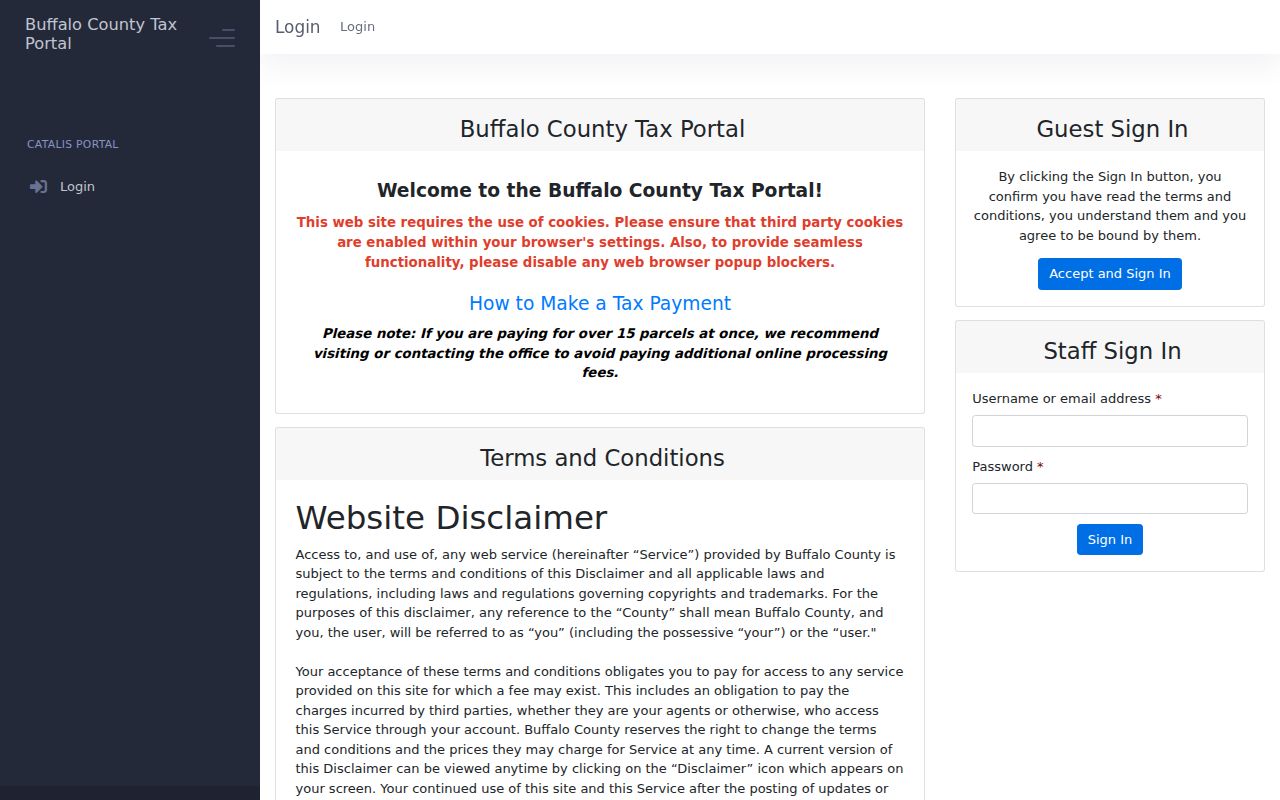
Open the portal and locate the parcel first. Then confirm any recent change in the Register of Deeds index before trusting the tax screen.
Confirm the Buffalo County Owner Across Records
A current-owner lookup works best as a cross-check, not a one-screen answer. Start with the tax record. Write down the owner name, parcel identification number, tax municipality, situs location, and legal description. Then pull the latest recorded deed. Names must match exactly. Compare the grantee, recording date, and property description against what the tax roll shows. The deed may name multiple grantees, a trust, a life estate, or an entity, so preserve the full wording instead of shortening it to one person's name. The legal instrument states what interest transferred. A tax roll is only an administrative owner field.
The two sources update on different paths. Buffalo County says the Real Property Lister receives ownership changes after the Register of Deeds records them, then works with local assessors on the annual roll. No standard number of days is published. A recently recorded deed can sit beside an older owner name on the tax bill. That gap is normal. Compare the tax year and the recording date. Then ask the Lister whether the roll has caught up. For the legal effect of a transfer, consult a title professional rather than estimating timing from another parcel.
Estates add their own wrinkles. Locate the deed signed by the personal representative, along with any probate authority behind it. A transfer-on-death instrument may need a later filing to show the beneficiary's interest. A satisfaction, termination, or even a later deed can change which document matters most. Follow the same PIN down the deed chain. Note each instrument number and recording date.
Sometimes an LLC or corporation appears as grantee, and the Wisconsin Department of Financial Institutions runs a separate corporate-record search for entity status and registered-agent details. Those filings describe the business itself. They do not replace the land record. Nor do they necessarily name the people who benefit from the parcel. Keep the entity's legal existence separate from its title to a specific parcel.