
Find a Buffalo County Property Owner
Start with an address. The county's Tax/Assessment Info hub leads to the parcel viewer. It also leads to the Property Tax & Assessment Records Portal. County materials name the Real Property Lister as the office that keeps ownership current in the assessment database. However, the public login page does not display the live owner-search fields or the exact parcel-card label. Once the parcel comes up, write down its PIN and legal description. Then turn to the Register of Deeds index. Find the newest recorded deed that names the present owner as grantee. Compare the instrument's legal description against the parcel before you rely on it.
Why both sources? The assessment roll can lag behind a recent closing. The deed index may demand a separate search or paid remote access. A city permit record helps with property history. It does not prove who owns the land. When title sits with an entity, Wisconsin's corporate search shows filed entity information. It still cannot tell you which individuals control or benefit from that entity.
- Use the address or map to identify a tax parcel and write down its PIN and legal description.
- Read the owner-of-record entry in the county assessment system, treating it as the roll's current name.
- Search the Register of Deeds for the most recent conveyance and compare parties and land description.
- If an entity is named, check Wisconsin DFI's corporate filing record for the entity's public details.
- Use a listed mailing address only for a lawful, property-related purpose; it does not prove who lives there.
Buffalo County Owner Record Sources
Several Buffalo County sources split the work. The Tax Portal and Real Property Lister hold the assessment-side ownership link. The Register of Deeds keeps recorded conveyances, mortgages, transfer-on-death instruments, and other papers. Those documents may explain a change in ownership. GIS pinpoints the parcel and shows which tax identifier to carry into the other systems. The Clerk of Courts and WCCA add context in certain cases. A judgment, probate event, foreclosure, or lien action may shape the ownership story. Each office answers a different piece of the question.
| Source | Owner Info It Gives | Access |
|---|---|---|
| Assessment and tax roll | Owner updates, tax account, and parcel information | County Tax Portal; live labels need confirmation |
| Register of Deeds | Parties and terms in a recorded conveyance | Laredo or Tapestry EON; copy at office |
| Wisconsin DFI | Filed corporate information for a named entity | Public corporation search |
| GIS Map Portal | Parcel location and map context | County map viewer |
An owner of record can be one person, an estate, a trust, a company, or co-owners. Two addresses appear in the records. The situs address identifies the property itself. The tax-mailing address tells you where the bill goes. Neither field confirms occupancy. A home may sit in an LLC or an estate. Its owner may get mail somewhere else entirely. Read the deed's vesting language. Seek legal advice when the form of ownership affects a transaction or inheritance question.
Limits of a Buffalo County Owner Lookup
A Buffalo County owner lookup identifies a record entry. It does not show the people present at a property. It cannot show whether an owner actually lives there. It also cannot reveal undisclosed beneficial owners behind an entity. Nor can it reveal an unrecorded claim against the title. Wisconsin public records carry statutory exceptions. Address-confidentiality protections such as Safe at Home may limit what appears. Use these records for legitimate property research, estate work, or civic review. Never target or harass a person with them.
Lawful use. Buffalo County owner information is for property research, due diligence, estate work, and civic review. Do not use a name or mailing address to stalk, threaten, or harass anyone.
Buffalo County PIN Bridges Owner Records
The parcel identification number ties a parcel to the assessment roll. It also connects the county map and other land information. That single number is the thread connecting Buffalo County records. You can find a PIN on tax documents. The Treasurer and the county website can supply one too. When an address search returns several parcels, compare the municipality and legal description before choosing. Pick carefully, since two parcels can share a street number in different towns.
A PIN is not required on a recording instrument. Older Buffalo County deeds may describe land only by plat, lot and block, or section-township-range. Carry the legal description alongside the owner name as you move between portals. Remember that a tax roll entry reflects an annual update. A deed records one specific conveyance. If the names disagree, compare recording dates. Ask the Real Property Lister whether an update is pending. Never assume the newest-looking portal is the complete one.
Buffalo County Entity Ownership Clues
Sometimes the tax roll names an LLC or corporation rather than a person. Buffalo County deed and tax records still establish the land record itself. For the entity behind the name, Wisconsin DFI's corporate records search offers separate public filings. A registered agent or officer entry is not a deed grantee. It is not proof of beneficial ownership either. Trusts, estates, and co-owners add another layer. Sorting out how title moved may take a recorded transfer-on-death instrument, a probate order, or another conveyance.
Several Buffalo County offices hold the relevant materials. The Register of Deeds records transfer-on-death instruments and terminations of a decedent's property interest. The Clerk of Courts and Register in Probate keep estate files and orders, and the Buffalo County Historical Society microfilm includes probate files from 1854 through 1900. Use those papers to explain a name trail. Then confirm the land transfer with the recorded instrument itself.
Buffalo County's Owner Roll Can Lag
Timing matters when you check ownership. The Real Property Lister updates the assessment database after ownership changes are recorded in the Register of Deeds, working with local assessors on the annual roll. Buffalo County publishes no typical closing-to-roll delay. So a recent deed can be newer than the name in a tax record. Before calling anyone the current owner, check the recording date, legal description, and parcel. For a starting point, the county's Tax Portal guest sign-in handles an address lookup.
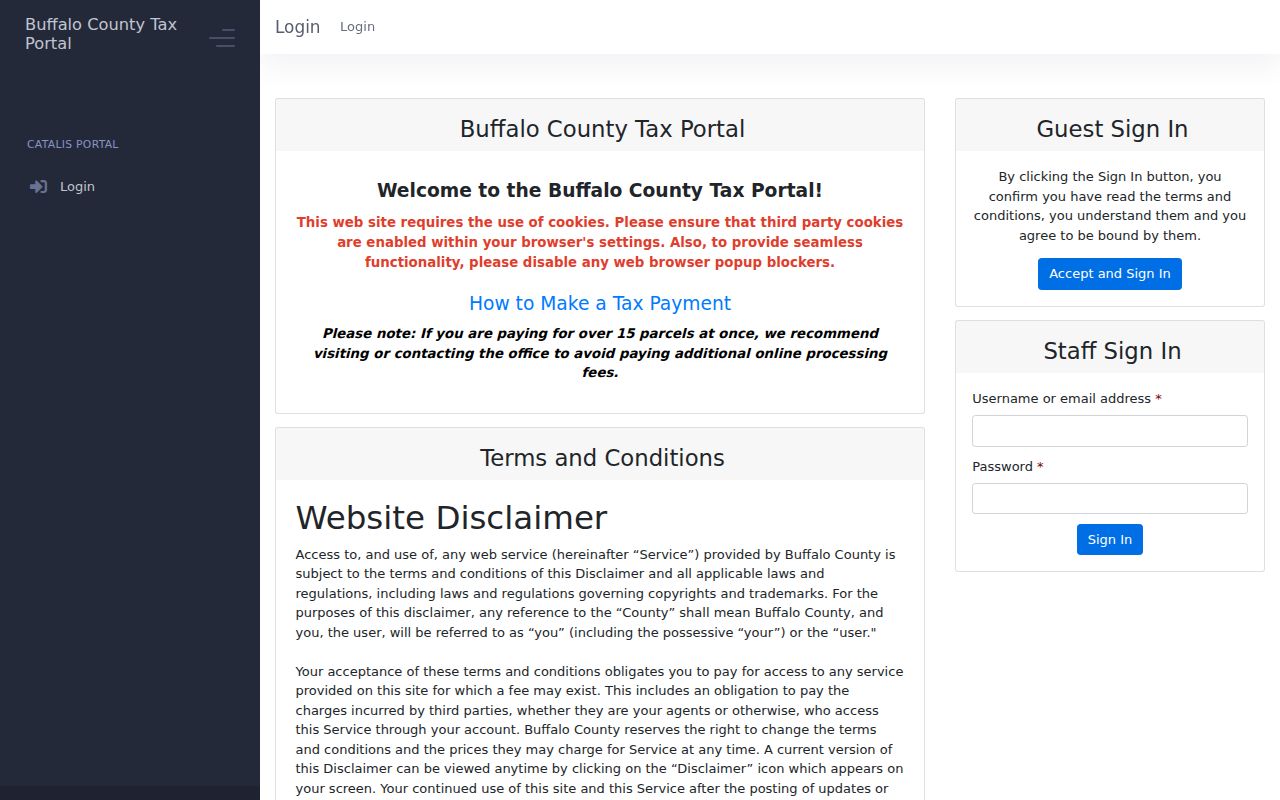
Inside the portal, treat the parcel result as a lead only. Verify the transfer in the deed index.
Buffalo County City Records Stay Separate
A parcel inside a city limits creates a split record. The county keeps the deeds, mortgages, plats, and certified survey maps. It also holds the tax-roll ownership and the GIS parcel record. The municipality holds its own permits, zoning files, municipal court matters, and special assessments. Alma's permit form, for instance, asks who applied and who owns the property. But the completed form belongs to an application file, not a recorded conveyance. For permit history, ask the city for filings by address and date range.
City, town, and ZIP labels also overlap in Buffalo County. The municipality list shows City of Mondovi and Town of Mondovi as separate entries. The same split appears for Alma. So a postal city does not settle the jurisdiction. Check the tax municipality and the parcel's actual location instead of assuming.
Buffalo County Owner Fraud Alerts
The Register of Deeds offers a free Property Fraud Alert for Buffalo County. It matches submitted names against newly recorded documents. When something hits, it sends a notice. That makes it an early warning service, not a wall against a filing. Similar names can trigger a false match. So weigh the instrument date, type, and legal description against the parcel before drawing any conclusion about an owner of record. Review the county's alert details. Contact the custodian if a notice points to a deed or lien you do not recognize.
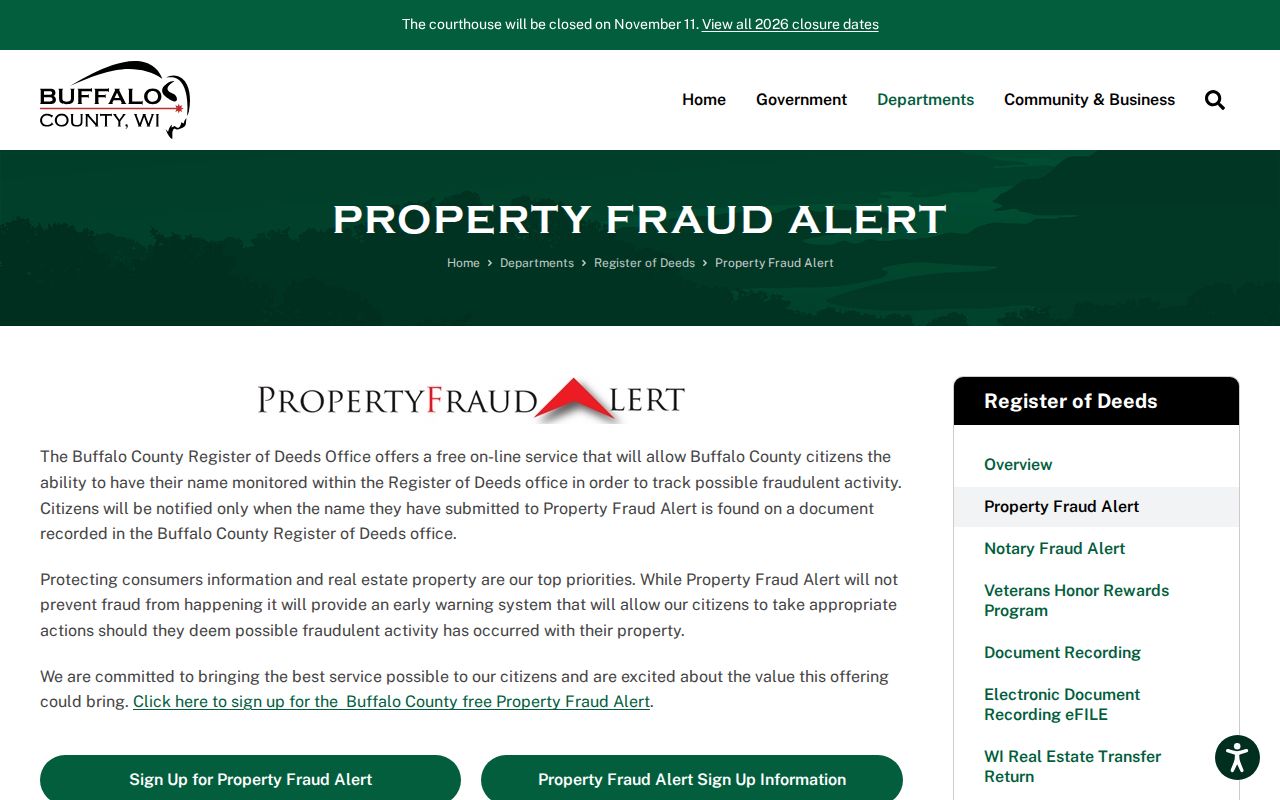
Treat an alert as a cue to pull the filed document itself. It is not a finding about who owns the land.
Read the Buffalo County Vesting Name
Say the tax portal or county roll hands you a likely owner. That name is a lead, not the final answer. Pull the newest deed. Compare the grantee's full legal name, the form of ownership, the recording date, and the land description. One record may carry a middle initial the next omits. A trust, estate, or limited liability company can be the real grantee even when an individual signed. These variations do not prove the entries describe the same parcel. Match the legal description and the parcel number.
The county deed index supports a backward chain. Start with the current owner's name as grantee. Open that instrument. Then search its grantor as grantee in the earlier transfer. Laredo serves frequent users on subscription, while Tapestry EON handles the occasional public search. Neither service posts an exact year cutoff on the county information page. Ask the Register of Deeds about a paper route for older deed records when the chain stops online. And remember that a matching surname with a different subdivision, lot, or section is not an ownership match.
Keep two questions apart: who owns the parcel, and who is tied to the mailing address. Tax records can list a destination other than the situs. Public fields may hide beneficial interests or occupants. Do not infer residence, family ties, or identity from a shared surname. A transaction or a legal dispute calls for a title professional. Bring one in to examine the full chain, mortgages, releases, and other recorded interests.